Homemade Whole Grain Mustard
This post may contain affiliate links. As an Amazon associate, I earn a commission from qualifying purchases.
Skip the store-bought and make your own whole grain mustard. This classic condiment is easy (and inexpensive) to make, and is perfect for schmearing on sandwiches, adding to sauces, or serving with charcuterie.
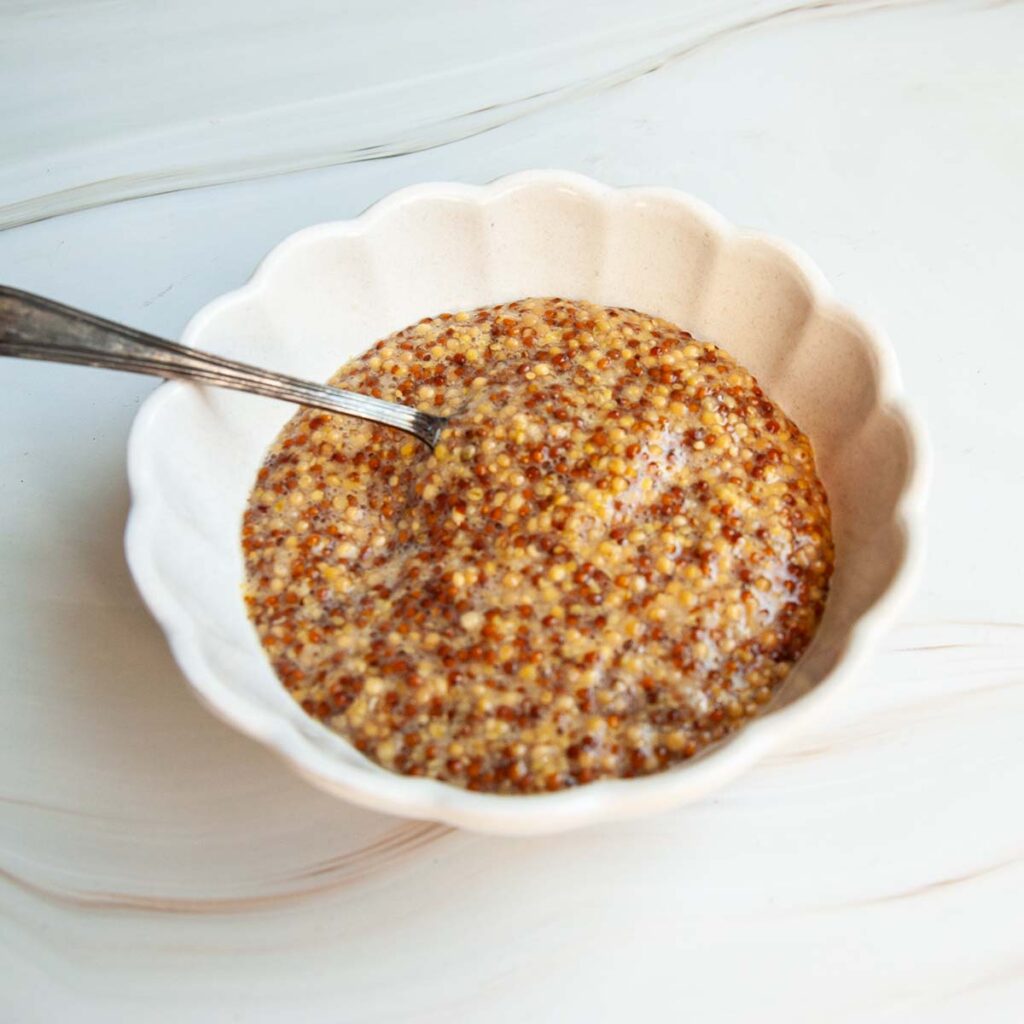
Recipe at a Glance: Whole Grain Mustard
- Details
- Storage: Refrigerator
- Storage life: Up to 6 months in the refrigerator
- uses for whole grain mustard
- Spread it on sandwiches.
- Whisk it into a simple vinaigrette for added heat and flavor.
- Stir it into potato salad.
- Combine it with maple syrup to make a glaze for grilled pork tenderloin or salmon.
Almost all condiments that you can make yourself will taste better when homemade, however, some of them require so much effort and so many ingredients that it makes more sense to rely on store-bought. This is not the case when it comes to homemade whole grain mustard. With only four ingredients and a little patience, you can have a spicy, creamy mustard that tastes infinitely better than anything you’ll find at the store. Try it and see for yourself.
Ingredients & Substitutions
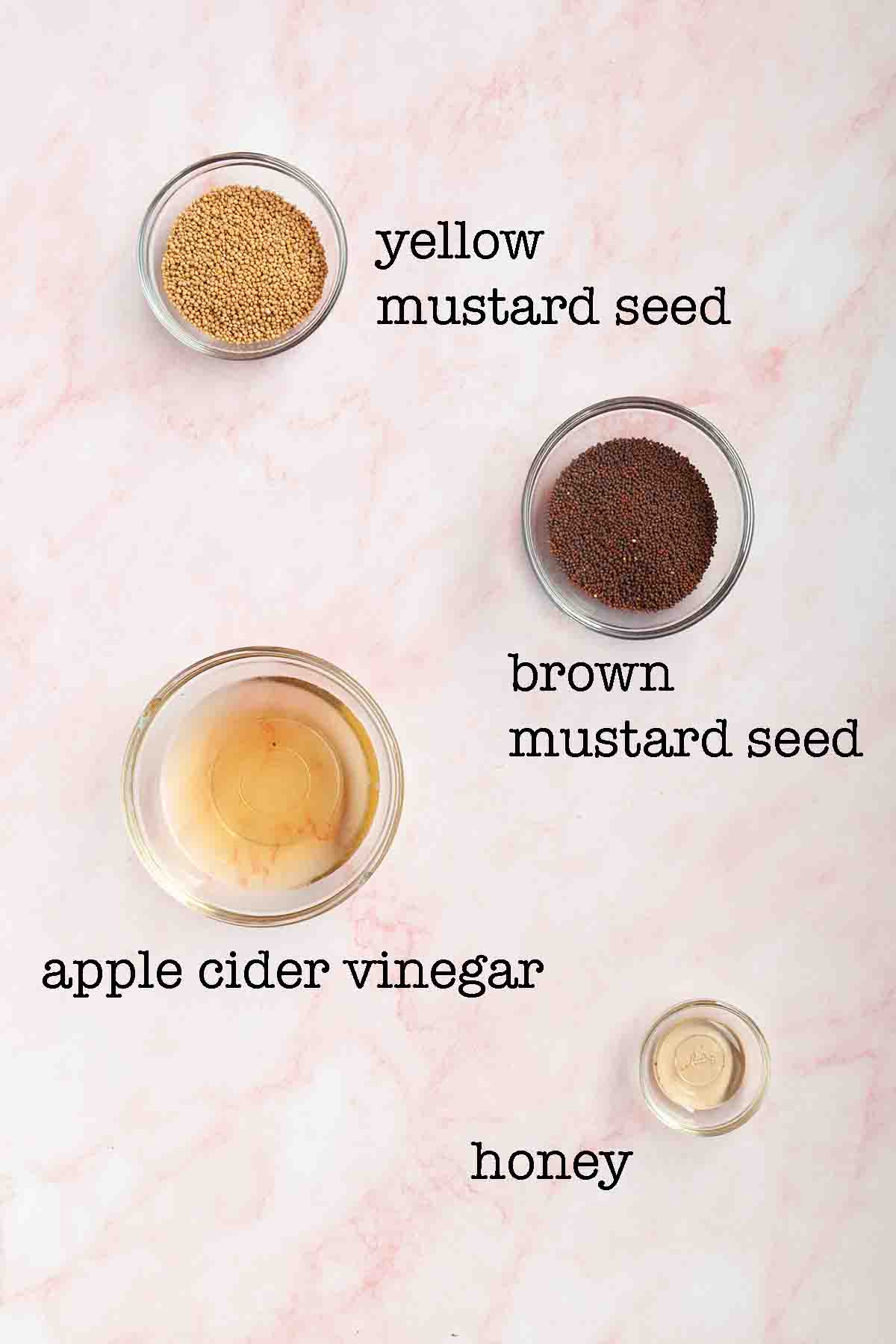
- Mustard seeds–For the best flavor, use both brown and yellow mustard seeds. Yellow seeds are easy to find at most supermarkets, however, brown seeds may require a trip to a spice merchant. You may find them at well-stocked supermarkets, or you can also order brown mustard seeds online.
- Apple cider vinegar–Vinegar helps the mustard seeds to break down to create the classic creaminess and also helps to preserve the mustard. For similar flavor, you can substitute white wine vinegar.
- Honey–This adds a little sweetness to the mustard and tames the bite of the mustard seed a little. If you find that your mustard is still too sharp, you can add a little extra honey.
How to Make Whole Grain Mustard
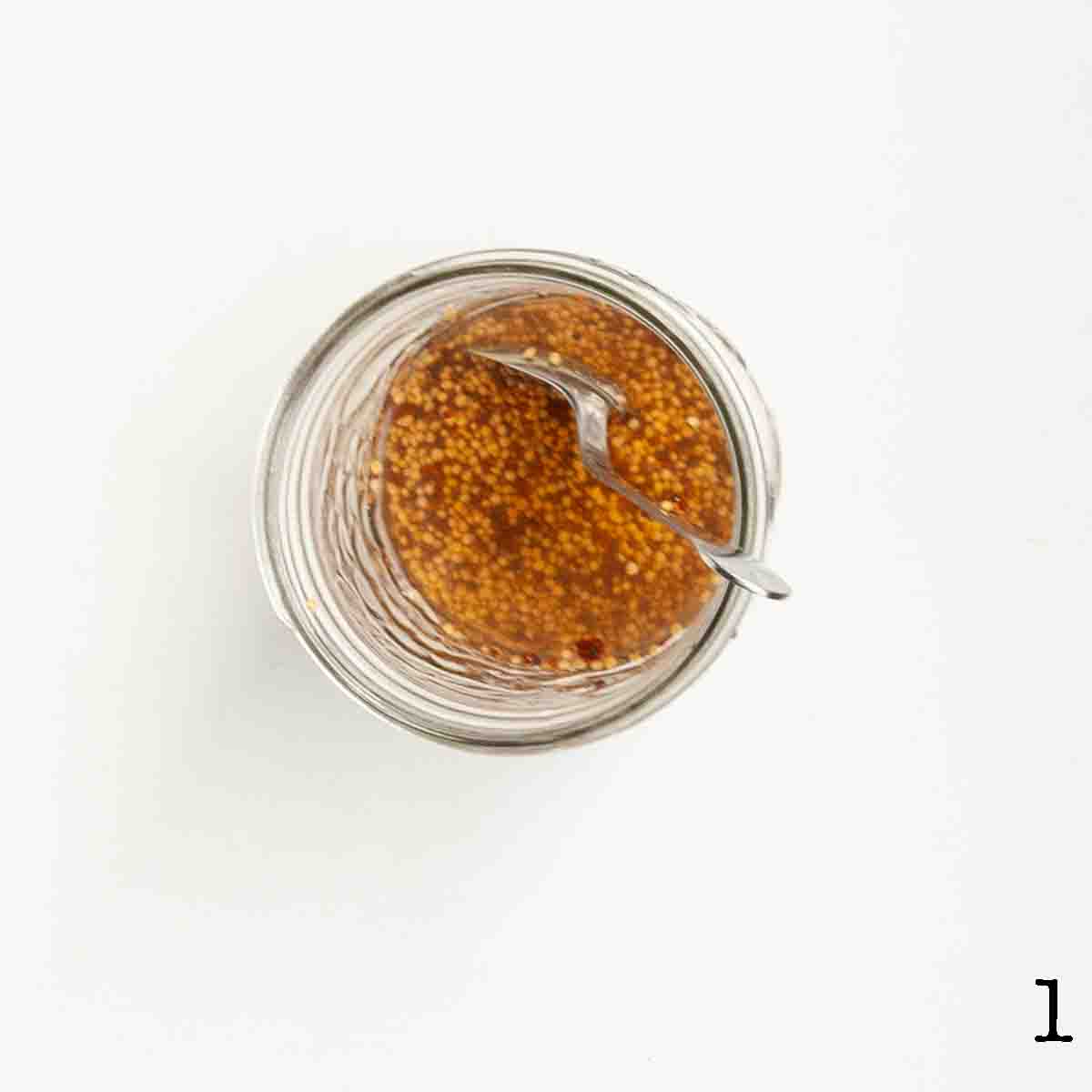
1. Combine the mustard seeds, vinegar and water in a wide mouth jar or bowl.
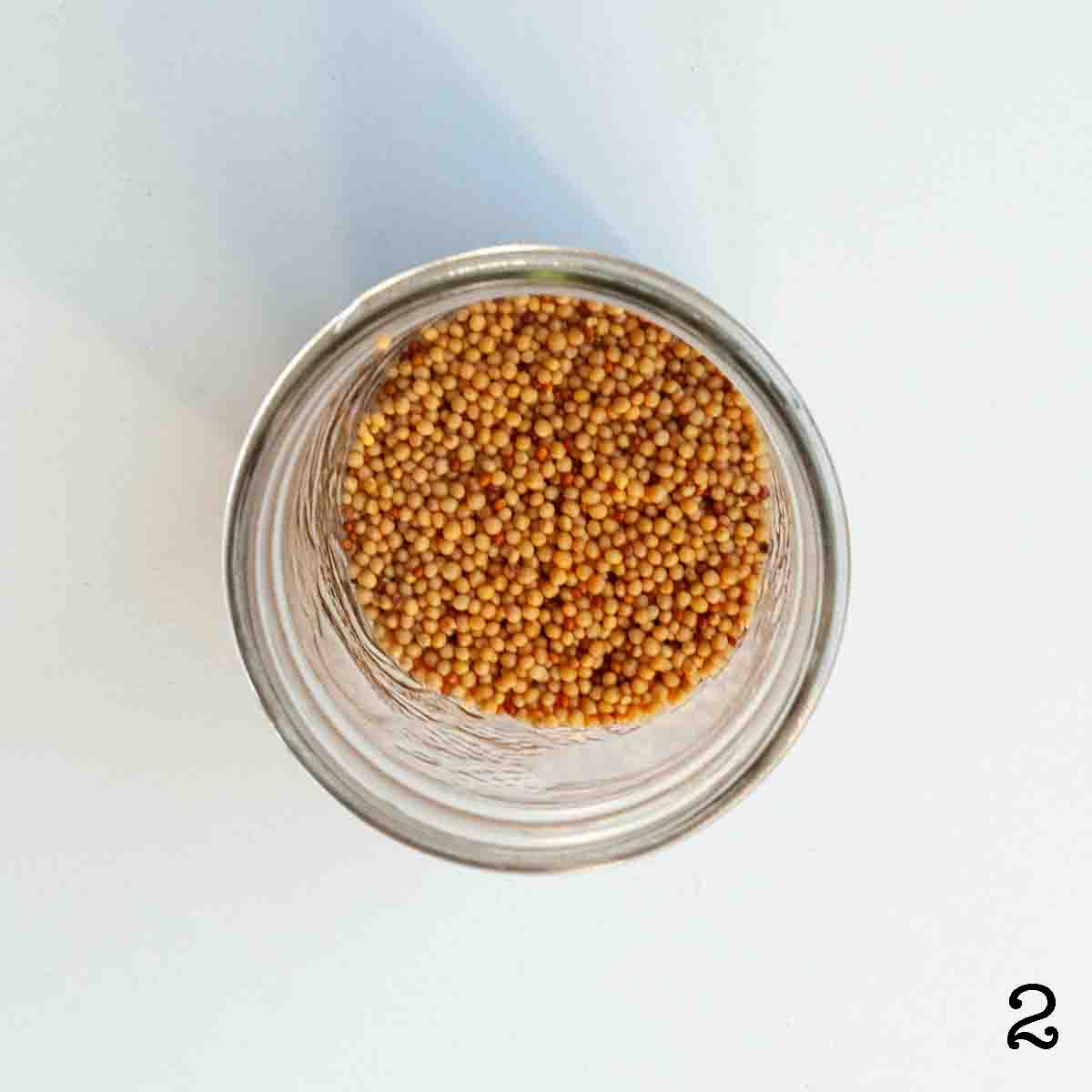
2. Cover and soak until the liquid is mostly absorbed.
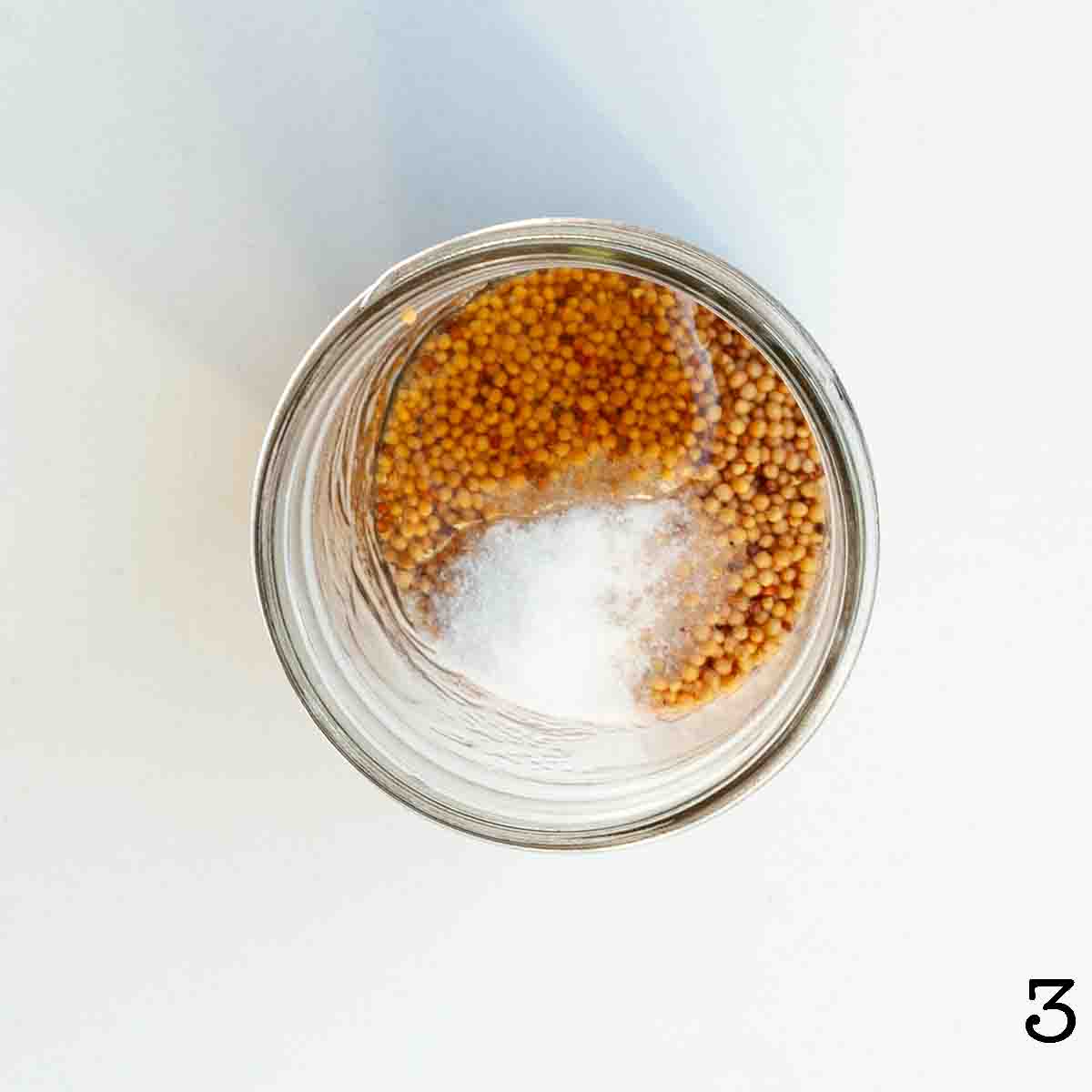
3. Stir in the honey and salt.
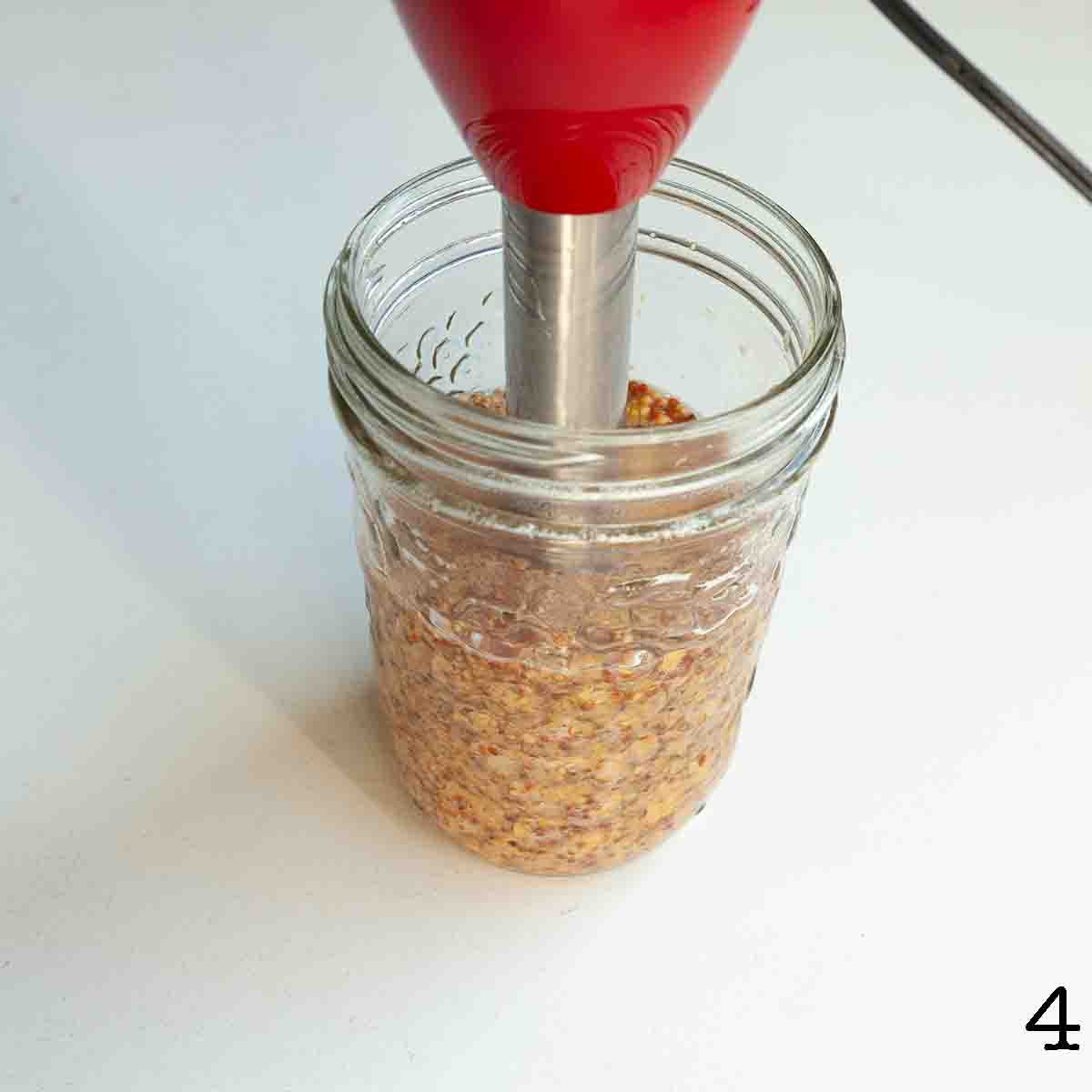
4. Use an immersion blender to blitz the mustard until creamy.
Ways to Use Whole Grain Mustard
Use your homemade mustard anywhere you’d like a spicy bite, or anywhere you typically use your favorite spicy mustard. Here are a few of my favorites:
- Blend it into a vinaigrette for drizzling over salad.
- Stir it into French or German-style potato salad.
- Schmear it onto a ham and cheese sandwich.
- Combine it with maple syrup, then brush onto pork tenderloin or salmon before grilling or roasting.
FAQs
Yes, you can, but it stores so well and for such a long time in the fridge, I don’t think it’s necessary unless you’re making a very large batch and don’t have the fridge space. If you do want to water bath can it, put it into half-pint size jars and process for 10 minutes, adjusting for altitude.
If you’ve left your mustard seeds in the liquid overnight and the liquid is not absorbed, you may have old seeds or your seeds are damaged. After soaking, the outside of the mustard seeds should feel gelatinous. If they are not, or there is still a lot of liquid in the jar, purchase new seeds and start again.
Storage
Store your homemade mustard in a covered jar in the fridge for up to 6 months. It will likely still be safe to eat for up to 1 year, but will lose its potency.
Tips & Troubleshooting
- I recommend making this in a wide mouth jar. You can soak your seeds, blend the mustard (using an immersion blender), and store the finished mustard in the same jar. No extra dishes!
- The mustard will be at its spiciest for the first 2 weeks. Let it hang out in the fridge and mellow for a couple weeks before adjusting the amount of honey.
- This recipe is suitable for gluten-free and dairy-free diets.
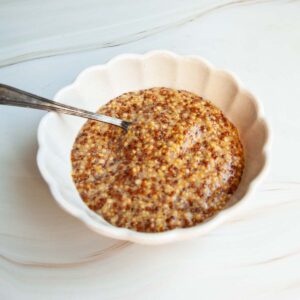
Homemade Whole Grain Mustard

Equipment
Ingredients
- ¼ cup yellow mustard seeds
- ¼ cup brown mustard seeds
- ⅓ cup apple cider vinegar
- ¼ cup water
- 1 tablespoon honey
- ¾ teaspoon table salt
Instructions
- Combine the mustard seeds, vinegar, and water in a wide mouth Mason jar or bowl.
- Cover and let the mixture soak until the liquid is mostly absorbed. This can take anywhere from 4 to 24 hours.
- Stir in the salt and honey.
- Use an immersion blender to pulse the mixture directly in the jar (or in the bowl), until the mustard reaches your desired consistency. I find that 8 to 10 pulses gets it fairly creamy.
- Cover and refrigerate.
Notes
- No dishes method–I recommend making this in a wide mouth jar. You can soak your seeds, blend the mustard (using an immersion blender), and store the finished mustard in the same jar. No dishes!
- Let it mellow–The mustard will be at its spiciest for the first 2 weeks. Let it hang out in the fridge and mellow for a couple weeks before adjusting the amount of honey.
- Dietary–This recipe is suitable for gluten-free and dairy-free diets.