How to Make Sure Your Jam is Set
This post may contain affiliate links. As an Amazon associate, I earn a commission from qualifying purchases.
Whether you’re making a small batch of refrigerator jam or canning a few jars of orange-lemon marmalade, you want to make sure your preserves are set. Here are a few simple tips to ensure you have jam that’s not too thick and not too thin.
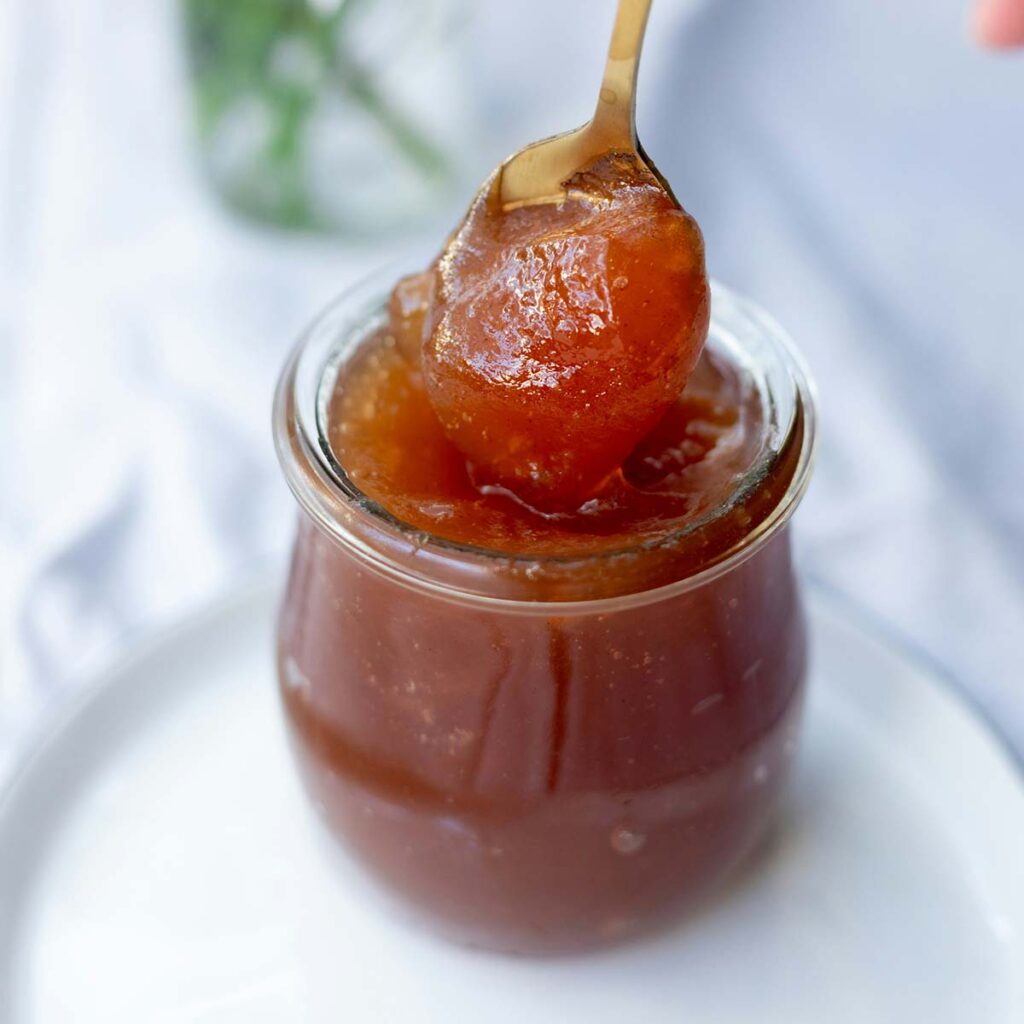
You’ve got a couple of options when determining if your jam or jelly is set. The first, and most accurate method is with a candy thermometer. I recommend this for anyone new to jam-making. The second is by using the “cold plate test”. Each method has its benefits and as you gain more experience with jam making, you’ll discover the method you prefer most. You can also use both, as I often do.
Using a Thermometer
A candy thermometer or instant read thermometer is going to give you the most accurate idea of what’s going on inside that pot. Jam, jelly, or marmalade will set at 220°F (105°C) at sea level. For each 1000 feet (300 m) of elevation gain, you can reduce the set temperature by 2°F. So, if you live at 2000 feet above sea level, you can expect your jam to be set at about 218°F (103°C).
Most candy thermometers come with a clip which allows you to attach it to the side of your pot. Ensure that the bottom of the thermometer is fully submerged in the jam but not touching the bottom of the pot. When the thermometer reaches your setting point, remove it from the heat immediately. Overcooking the jam will cause it to become extremely thick.
Do not attempt to do this with a meat thermometer as it’s not designed for exceptionally high temperatures and may give inaccurate readings.
The Cold Plate Test
The cold plate test is exactly what it sounds like. A pre-frozen plate is used to quickly chill your jam to see if it sets up. This method is ideal if you don’t have a suitable thermometer. It’s also a good choice if you’ve got lots of jam making experience and have a good feel for when you think the jam is ready. As it approaches the setting point, you will notice the jam begin to thicken, but it will still seem much thinner than finished jam. This is due to the high temperature of the jam, which is why the cold plate test is used.
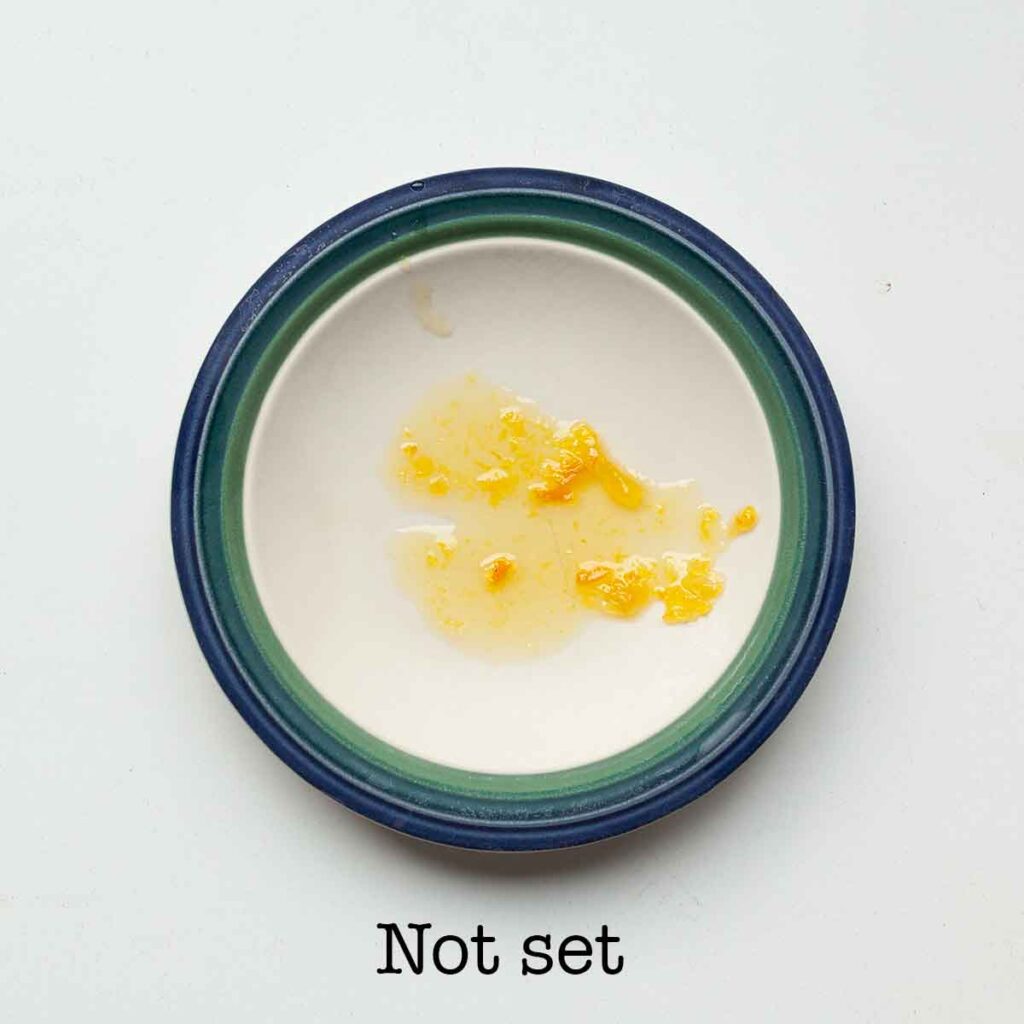
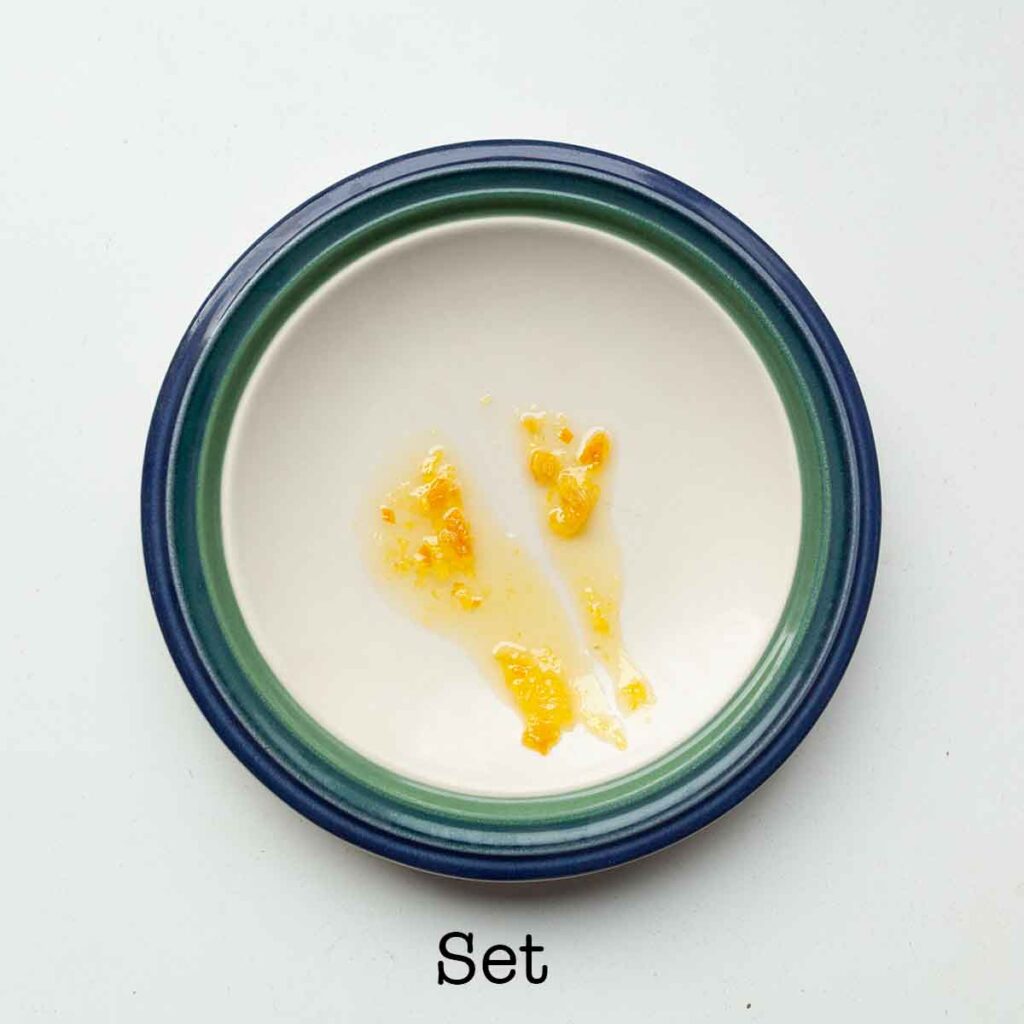
Here’s how to do it:
- Pop a small plate or saucer (or 2 or 3) in the freezer while you’re cooking your jam.
- When you think it’s almost ready, grab the plate, and spoon a dollop of the hot jam into the center of the plate.
- Put the plate back into the freezer for 1 minute, then remove it from the freezer and run your finger through the center.
- The jam should wrinkle up and there should be a clear path where your finger pushed it. If liquid fills in the space left by your finger, it’s not quite ready. Keep cooking and check again with another plate in a few minutes.
Both methods have their benefits, and while neither is perfect, they’ll give you a good idea of when your jam is at the right thickness. For best results, you can even use both tests. Monitor the jam with a thermometer, and when you think it’s close, grab your cold plate!