Sauerkraut with Carrots
This post may contain affiliate links. As an Amazon associate, I earn a commission from qualifying purchases.
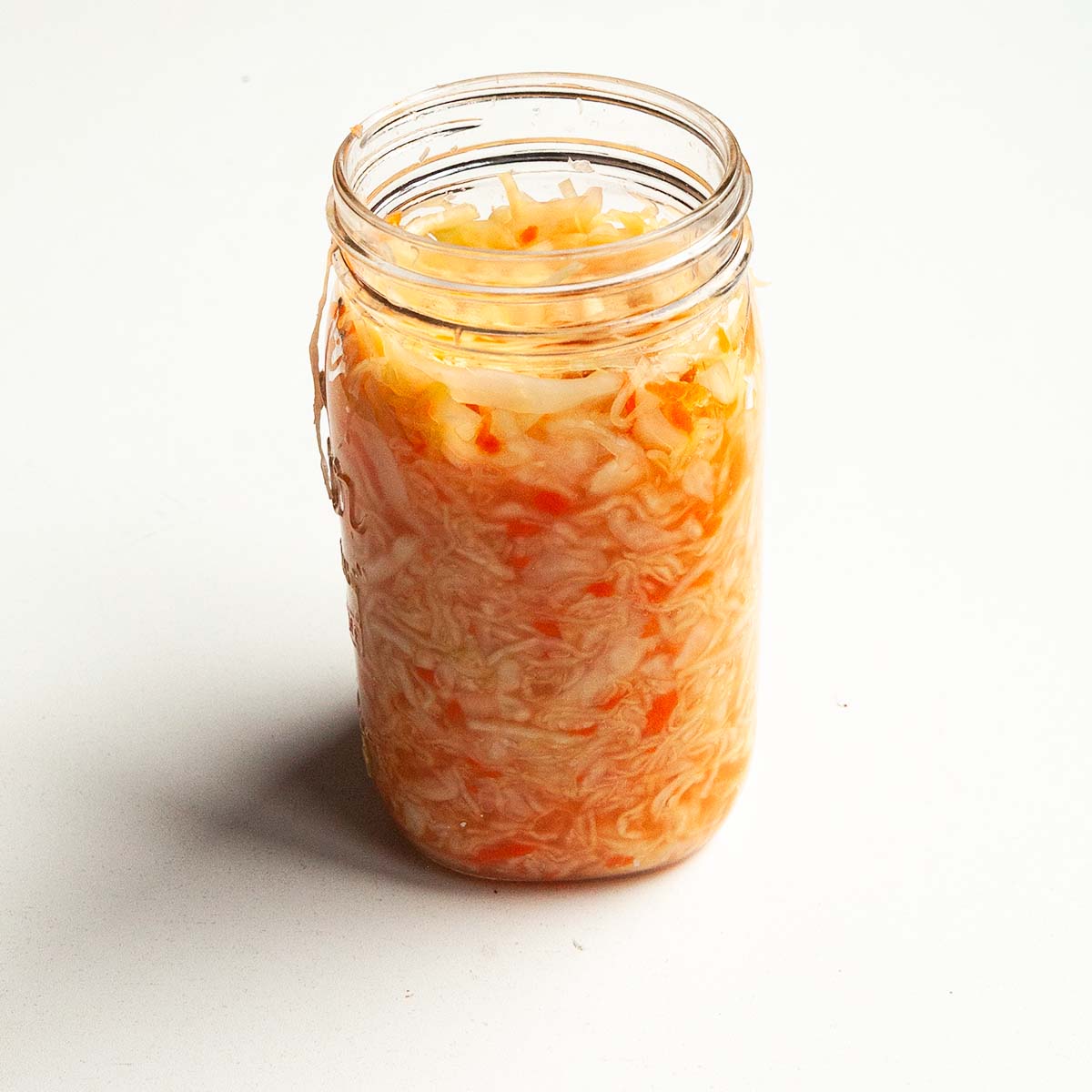
Homemade sauerkraut with carrots is one of the easiest home preserving projects to tackle. With less than 30 minutes of effort and only 3 inexpensive ingredients, the hardest part of this recipe will be waiting for it to ferment.

Recipe at a Glance: Sauerkraut with Carrots
- Details
- Preservation method: Fermentation
- Storage: Lidded container at room temperature during fermentation, then store in refrigerator
- Storage life: Up to 6 months in the refrigerator
- uses for Sauerkraut
- Spoon it over hot dogs or smoked bratwurst sausages.
- Stuff it into a Reuben sandwich, or make a grilled cheese with sauerkraut.
- Mix it into potato salad, egg salad, or add a spoonful to your bowl of soup.
If you’re new to fermenting your own food, sauerkraut is the best place to start. It’s incredibly easy to make and as long as you keep everything clean, it’s pretty foolproof. It’s also a fantastic way to use up a head of cabbage! Sauerkraut is traditionally made with cabbage (it literally translates from German to “sour cabbage”), but I love the addition of carrots here, both for a subtle sweetness and a pop of color.
Ingredients & Substitutions
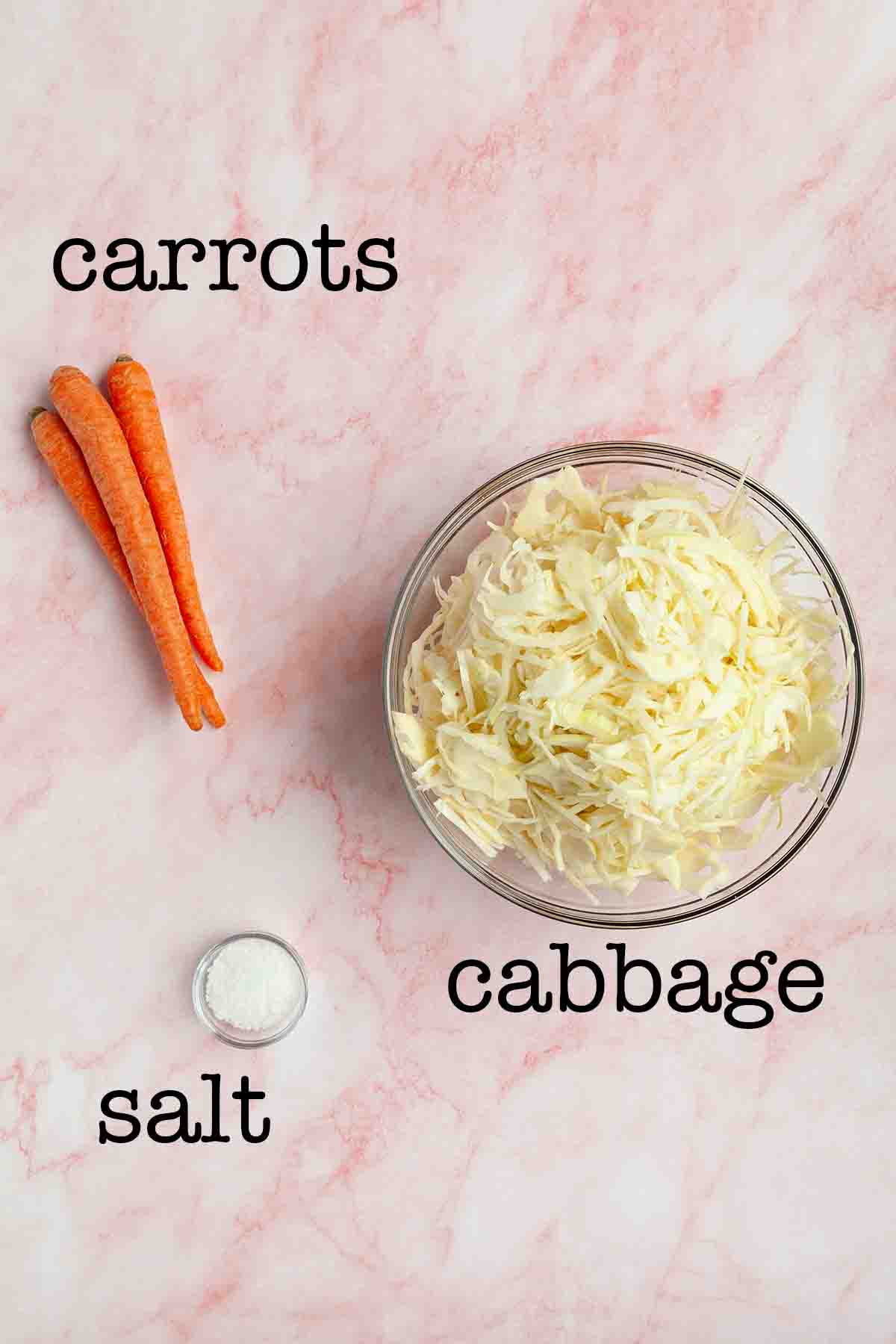
- Carrots–Depending on the size of your carrots, you’ll need 2 to 3 carrots to get 1 cup of shredded carrot. I recommend scrubbing and peeling your carrots to remove any hidden dirt.
- Cabbage–Regular green cabbage is best here. Remove and discard any outer leaves before you shred it. A mandoline slicer will shred the cabbage quickly, but a sharp knife works well, too.
- Salt–You need to use a salt that doesn’t contain any additives or anti-caking agents, which can hinder the bacteria in the fermentation and cause it to become cloudy. Pickling salt is the best choice here and is widely available, but kosher salt is also a great choice. Double check the label to make sure there aren’t any additives.
How to Make Sauerkraut with Carrots
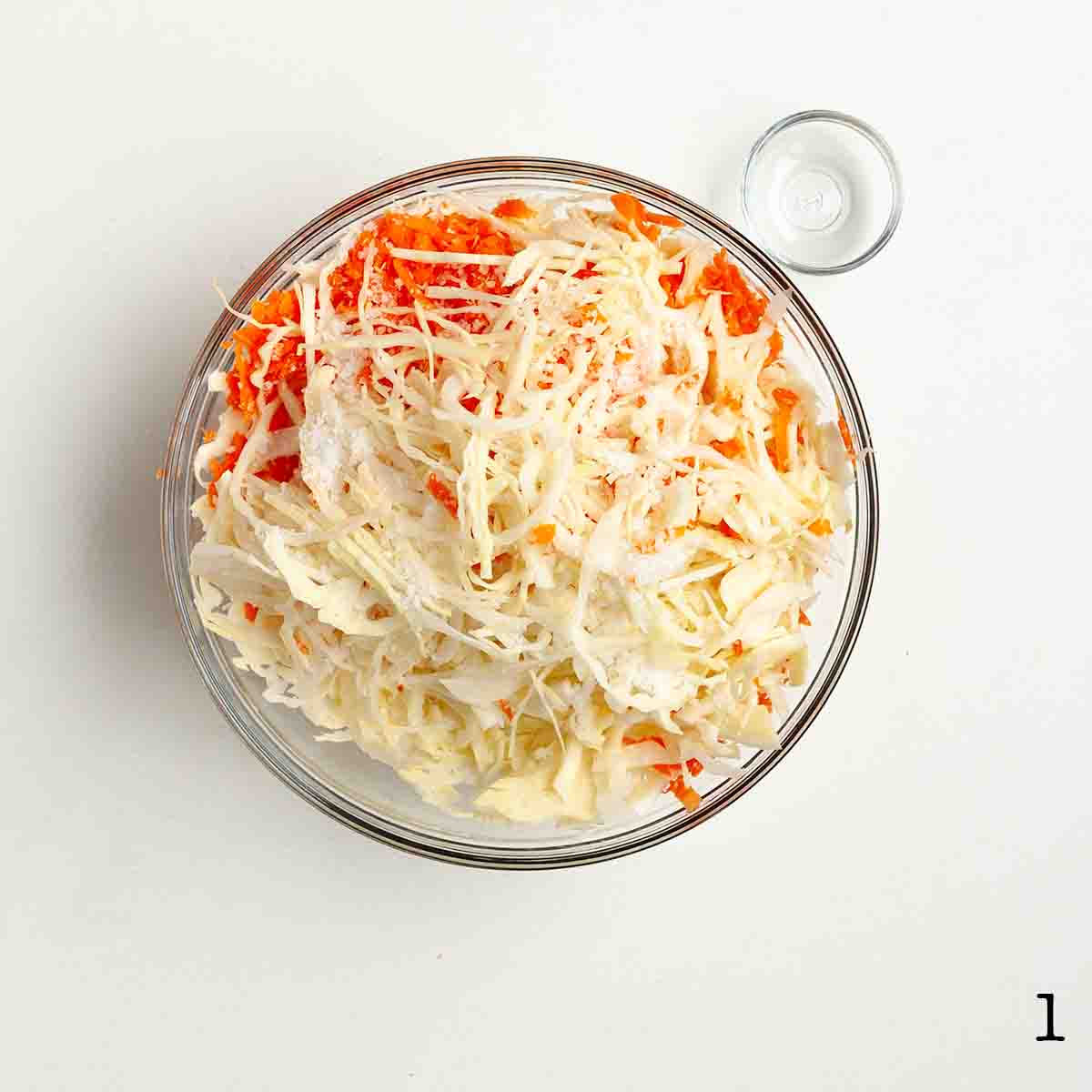
1. Combine the cabbage, carrots, and salt in a large bowl. Let sit for 5 minutes.
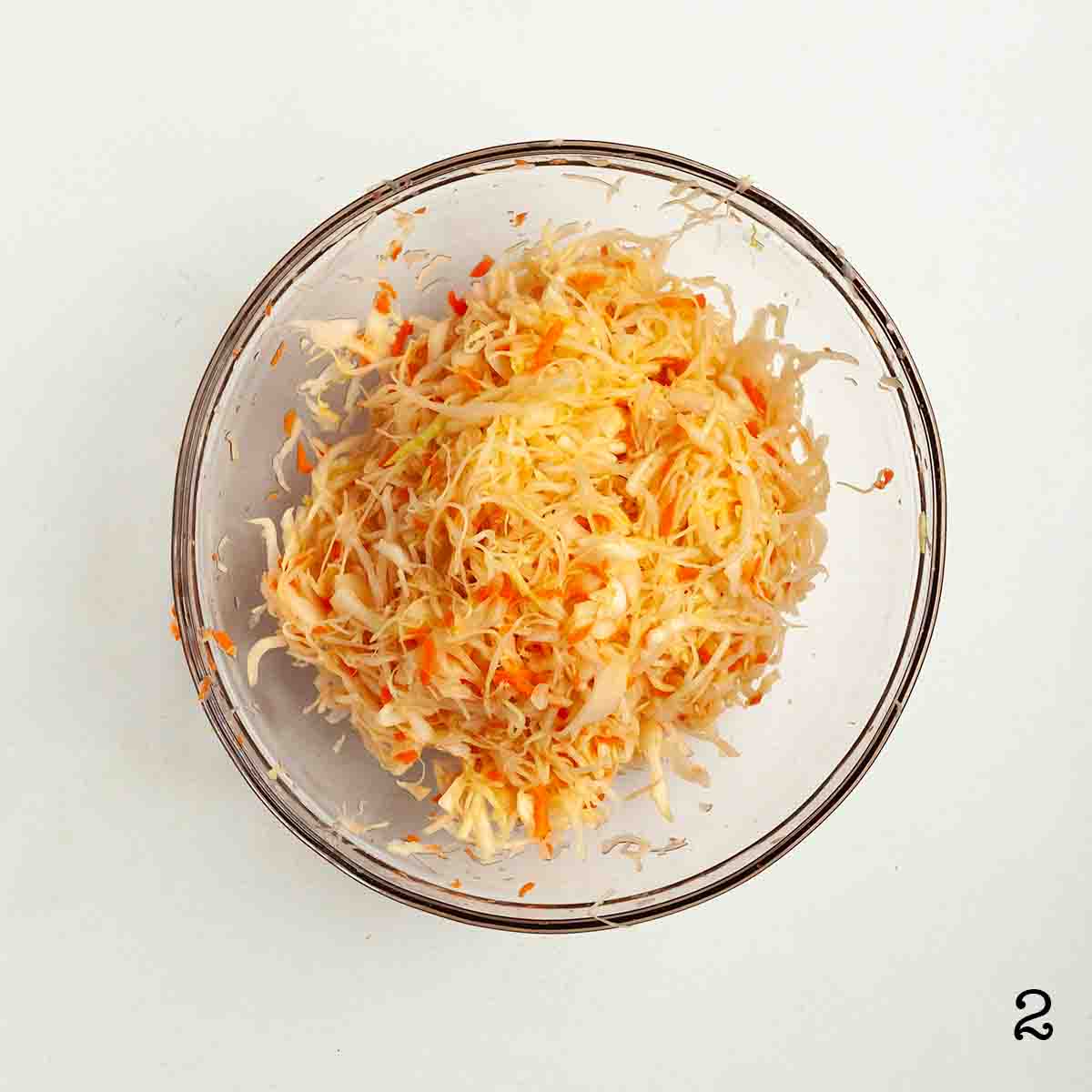
2. Massage with your hands for 5 minutes. The mixture will become wet and release liquid.
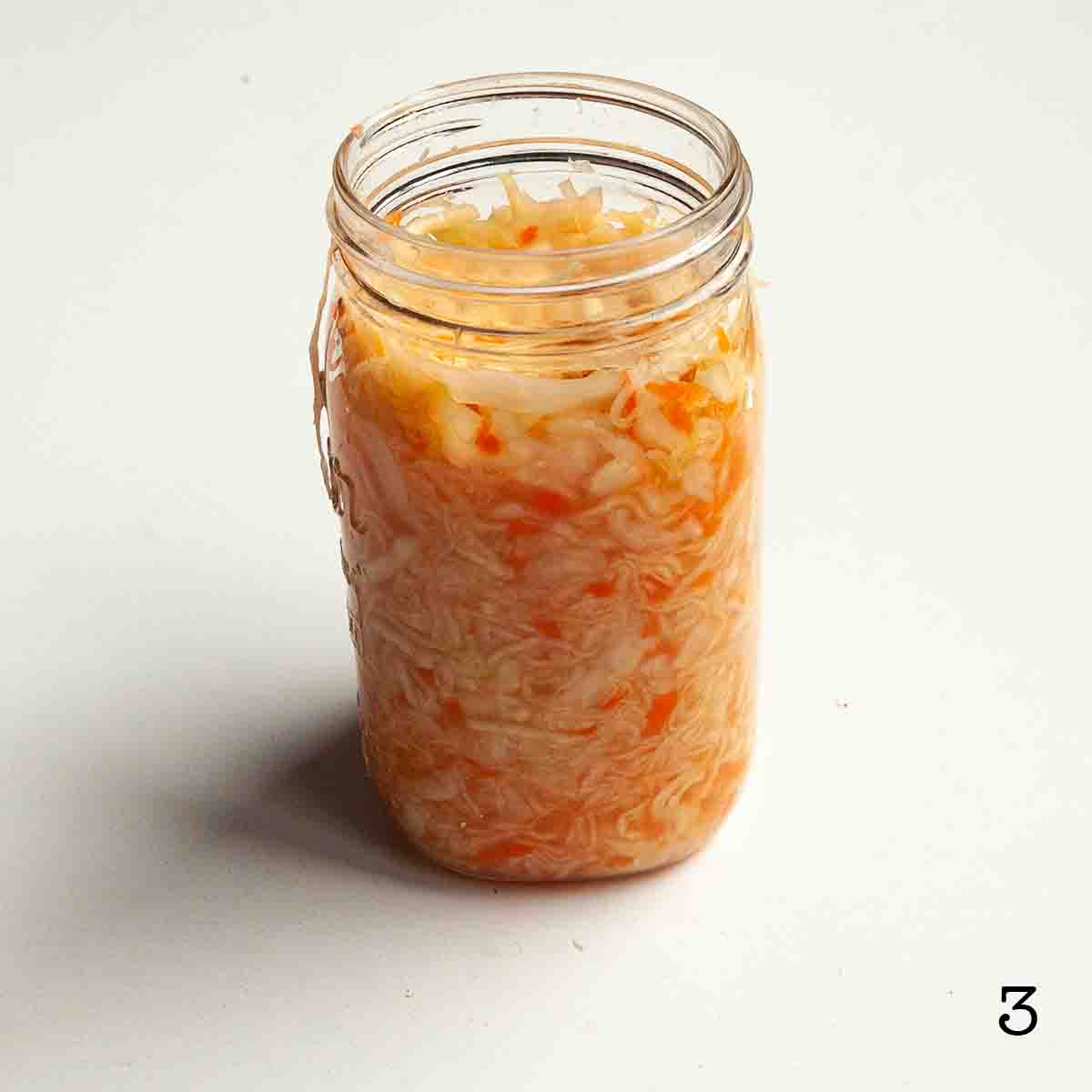
3. Firmly pack the cabbage and carrot mixture into a 1-quart glass jar.
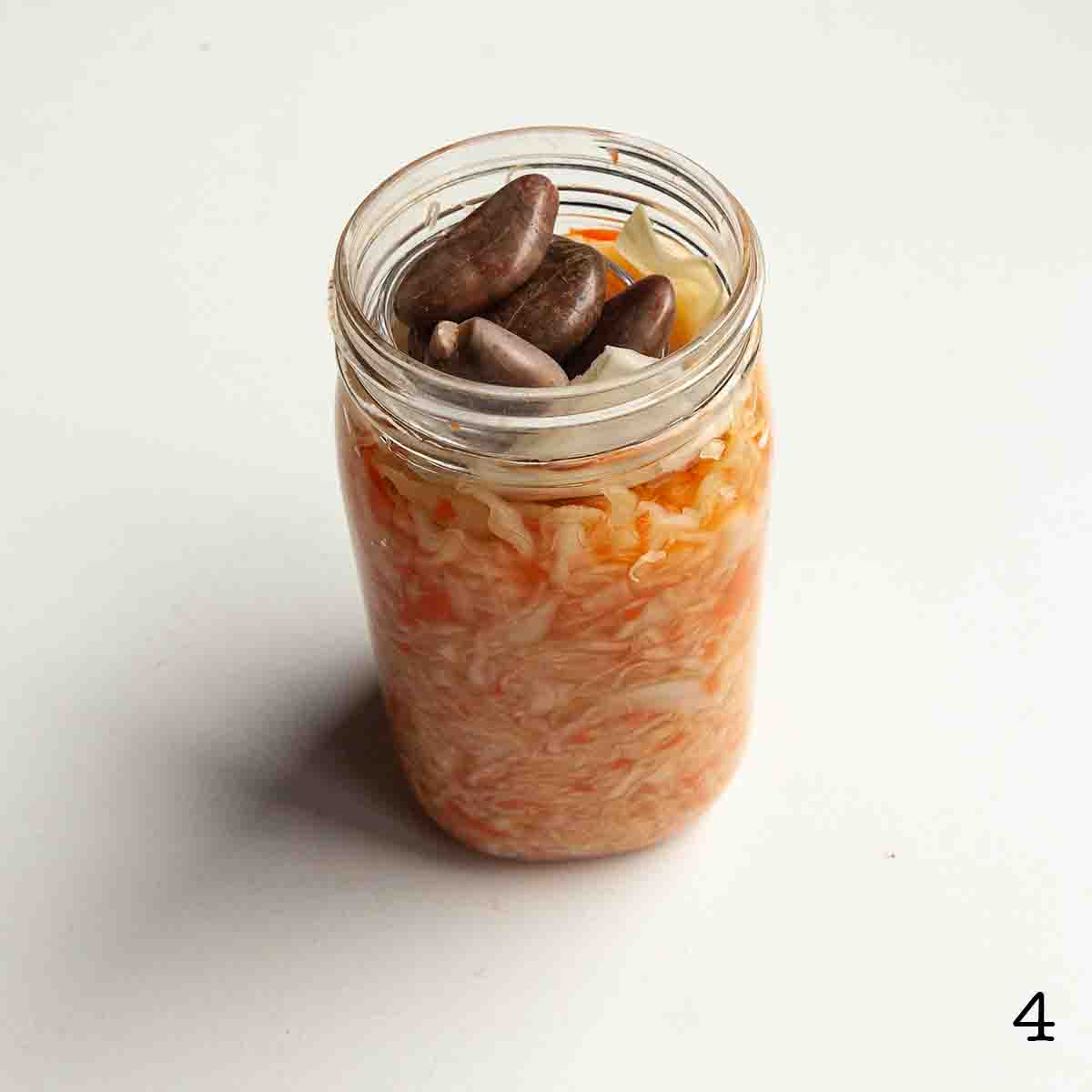
4. Place a weight on top of the cabbage (a small jar filled with rocks works well) to submerge the cabbage. Cover with a lid and let it ferment for 1 to 4 weeks. Pop the lid open once per day to release any gas.
FAQs
You may have some white scum form during the fermentation process that accumulates on top of the liquid. It generally looks thin and powdery and is a harmless product known as kahm yeast, but it should be removed before storage as it can alter the flavor of the finished sauerkraut.
It usually takes at least a week for the cabbage and carrots to ferment and begin to develop flavor, and after that, it’s a matter of personal preference. I like it best after 10 to 14 days of room temperature fermenting, but you can leave it for as long as 4 weeks, if you like a very tangy sauerkraut.
Although it’s best known for being piled on top of hot dogs or bratwurst, this tangy condiment is excellent stuffed into a Reuben or grilled cheese sandwich, mixed into potato or egg salad, or stirred into soup or stew.
Yes, but I don’t recommend it. Freezing will kill the healthy bacteria in your ferment, and given the long storage life of sauerkraut, it’s better to just stash it in the fridge and enjoy it.
Storage
Once your ferment has reached your desired taste and texture, store it in your lidded jar in the refrigerator for up to 6 months. Keep the cabbage and carrots submerged in the liquid, using a weight if necessary. The sauerkraut will continue to slowly ferment over time. If it develops a bad odor or has fuzzy mold growing on it, toss it out.
Tips & Troubleshooting
- To avoid spoilage, keep everything as clean as possible. Always use a clean, sanitized jar for fermenting, and a clean fork when removing sauerkraut from the jar.
- Even if your sauerkraut doesn’t require weight to submerge it, leave some extra space in the top of the jar as the fermentation process will create bubbles and may overflow if there isn’t some space in the jar.
- If your sauerkraut doesn’t have enough liquid to be fully submerged, make a 2% salt solution by dissolving 1 1/2 tablespoons salt in 1 quart (946 ml) water. Add enough to submerge the cabbage.
- While the cabbage ferments, keep it in a cool space and away from direct sunlight. Hot temperatures can cause it to become mushy or slimy.
- This recipe is suitable for gluten-free, dairy-free, and vegan diets.

Sauerkraut with Carrots

Equipment
- Mandoline optional
- 1 fermentation lid or plastic lid
Ingredients
- 2 pounds (907 g) green cabbage
- 2 to 3 medium carrots
- 1 tablespoon (18 g) pickling or kosher salt
Instructions
- Remove 1 leaf from the cabbage before shredding, and set aside. Use a mandoline or sharp knife to finely shred the cabbage. Grate or shred 1 cup of carrots.
- Combine the cabbage, carrots, and salt in a large bowl and mix well. Let it sit for 5 minutes.
- With clean hands, massage the cabbage mixture for 5 minutes. The cabbage will begin to soften and release liquid. After 5 minutes of massaging, your mixture should feel wet, take up less space in the bowl and there should be some liquid in the bottom of the bowl.
- Scoop the cabbage and carrots into a clean jar, then pour any remaining liquid in the bowl over the top. Use a tamper (I use the end of my rolling pin) to firmly pack the cabbage into the jar, pushing the liquid up and over the cabbage. Cut the reserved leaf into a circle slightly larger than the jar and place it on top of the cabbage.
- If the cabbage isn't fully submerged, add a weight, like a small jar filled with rocks or a food safe bag of water on top and place it on top of the leaf to keep everything submerged.
- Cover with a fermentation lid or plastic lid and let it sit for 1 to 4 weeks, until it reaches your desired flavor. Fermentation lids allow the gas to escape, but if you're using a plastic lid, pop it open once per day to allow any built up gas out.
- Store your finished sauerkraut in a sealed jar in the fridge and enjoy within 6 months.
Notes
- Keep it clean–Always use a clean, sanitized jar for fermenting, and a clean fork when removing sauerkraut from the jar.
- Leave some space–Even if your sauerkraut doesn’t require weight to submerge it, leave some extra space in the top of the jar as the fermentation process will create bubbles and may overflow if there isn’t some space in the jar.
- Adding liquid–If your sauerkraut doesn’t have enough liquid to be fully submerged, make a 2% salt solution by dissolving 1 1/2 tablespoons salt in 1 quart (946 ml) water. Add enough to submerge the cabbage.
- Keep it cool–While the cabbage ferments, keep it in a cool space and away from direct sunlight. Hot temperatures can cause it to become mushy or slimy.
- Dietary–This recipe is suitable for gluten-free, dairy-free, and vegan diets.