Blood Orange Curd
This post may contain affiliate links. As an Amazon associate, I earn a commission from qualifying purchases.
Enjoy the sweet flavor of blood orange long past citrus season with this easy blood orange curd recipe. This creamy citrus curd brightens up everything from desserts to your morning toast and will last for weeks in the fridge or freezer.

Recipe at a Glance: Blood Orange Curd
- Details
- What it is: A creamy custard made with egg and fresh blood orange juice.
- Storage: Airtight container in the refrigerator or freezer.
- Storage life: Up to 2 weeks in the refrigerator or 6 months in the freezer.
- uses for blood orange curd
- Create mini tarts by filling baked tart shells with curd.
- Fill a large pie shell with curd and top with meringue to make a blood orange meringue pie.
- Spread it onto toast, pancakes, or waffles.
- Layer it with cookie crumbs or granola and whipped cream or yogurt to create a stunning parfait.
Lemon curd is ubiquitous in desserts or as a breakfast spread year-round, but when blood oranges are in season, swap them in to create a slightly sweeter, rosy-hued version of the creamy custard. Although blood orange curd isn’t suitable for water bath canning, it freezes beautifully for at least 6 months, meaning you can enjoy it through spring (and even into summer). Use it anywhere you’d enjoy lemon curd and prepare to be amazed!
Ingredients & Substitutions
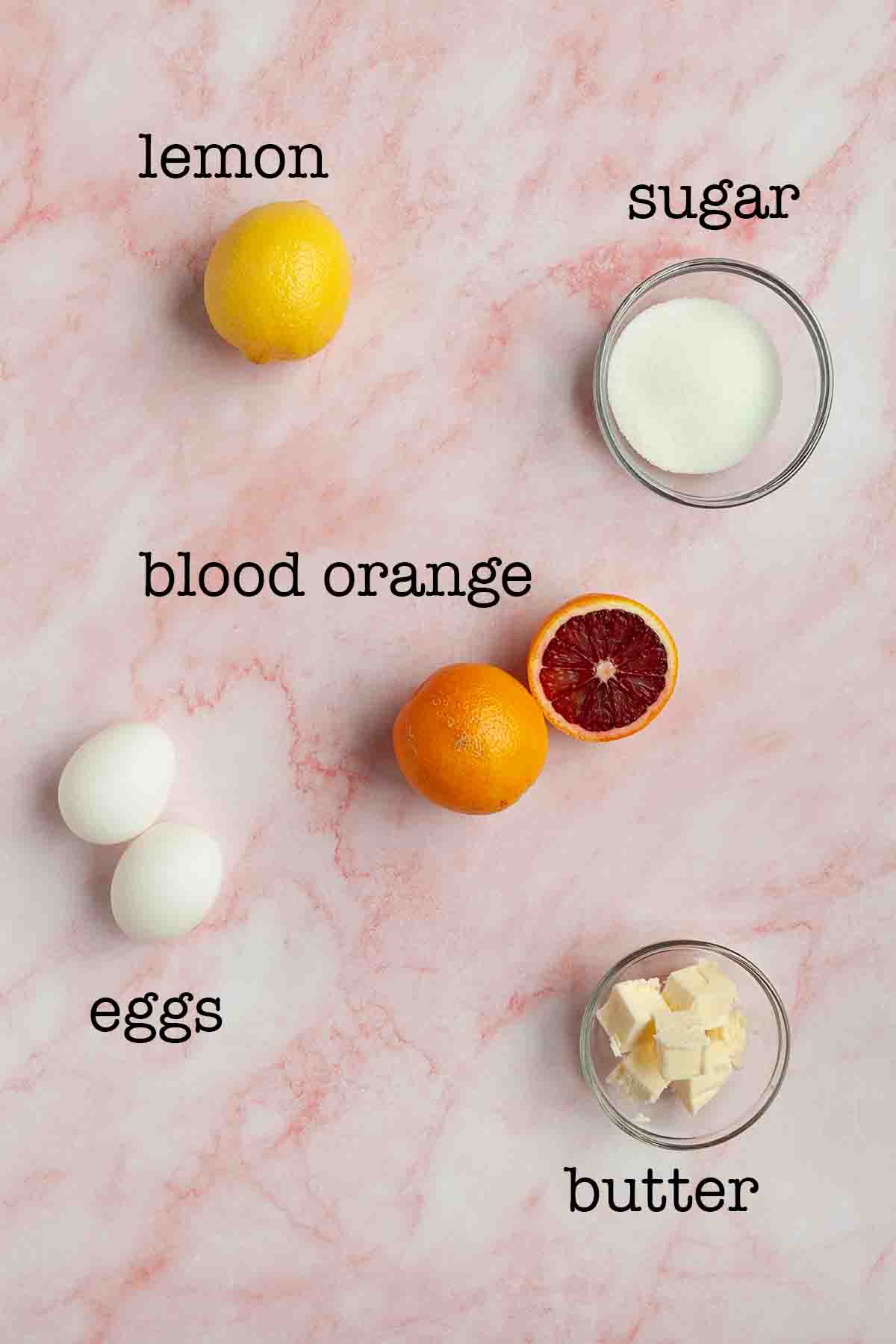
- Blood oranges–Available in the winter months, blood oranges have a dark red interior and a flavor that is slightly sweeter than traditional oranges. You may also see them labeled as raspberry oranges. Depending on the size of your oranges, you’ll need about 3 to get 1/2 cup of juice and 2 tablespoons of zest.
- Butter–If you use salted butter, don’t add the extra pinch of salt to the curd mixture.
- Sugar–Superfine sugar will dissolve easiest in the juice, however, regular granulated sugar will work. You can purchase superfine sugar at most supermarkets, or blitz granulated sugar in a food processor until finely ground.
How to Make Blood Orange Curd

1. Whisk the orange zest, orange and lemon juice, and sugar in the top of a double boiler until the sugar dissolves.
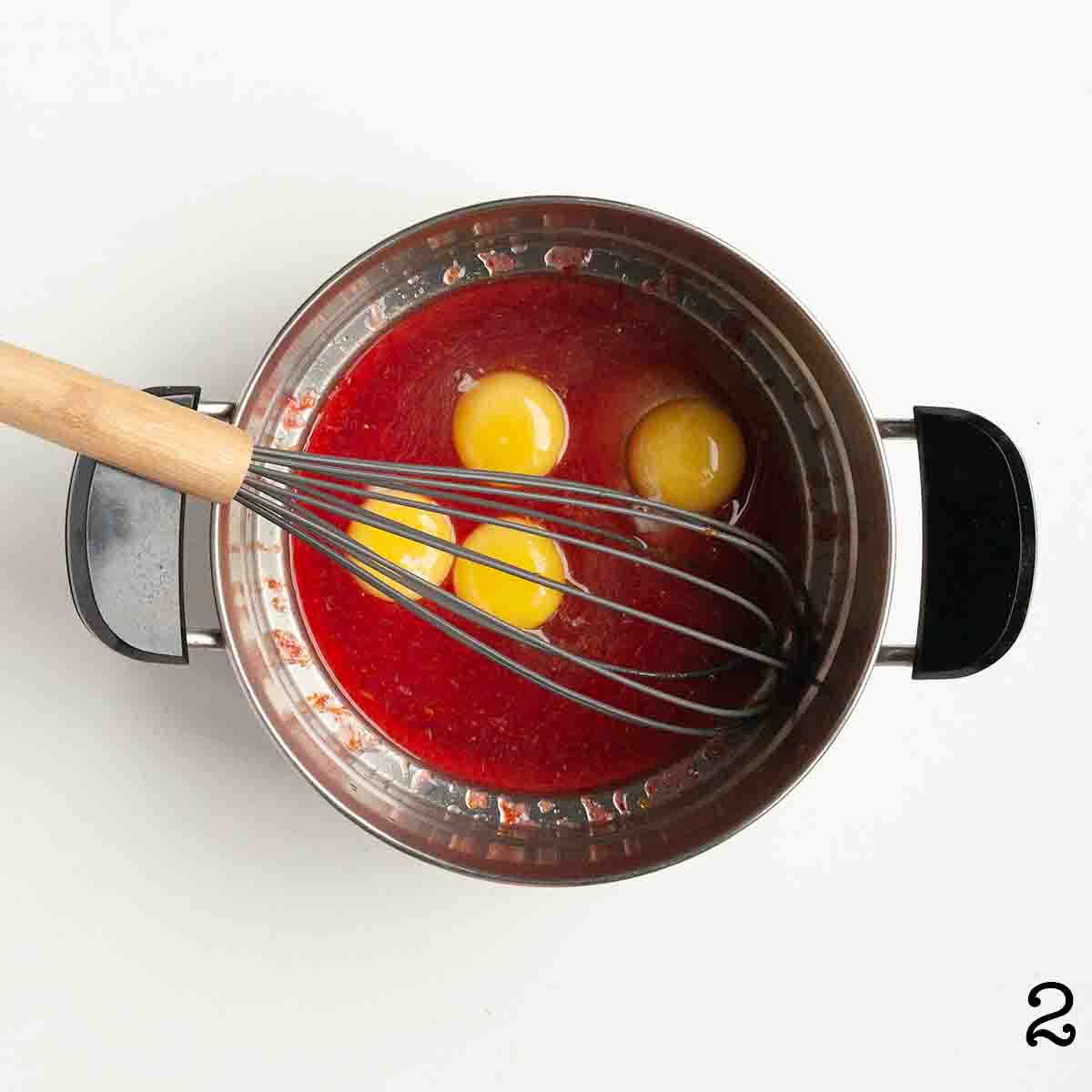
2. Add the egg yolks and whole egg and a pinch of salt and whisk to combine.
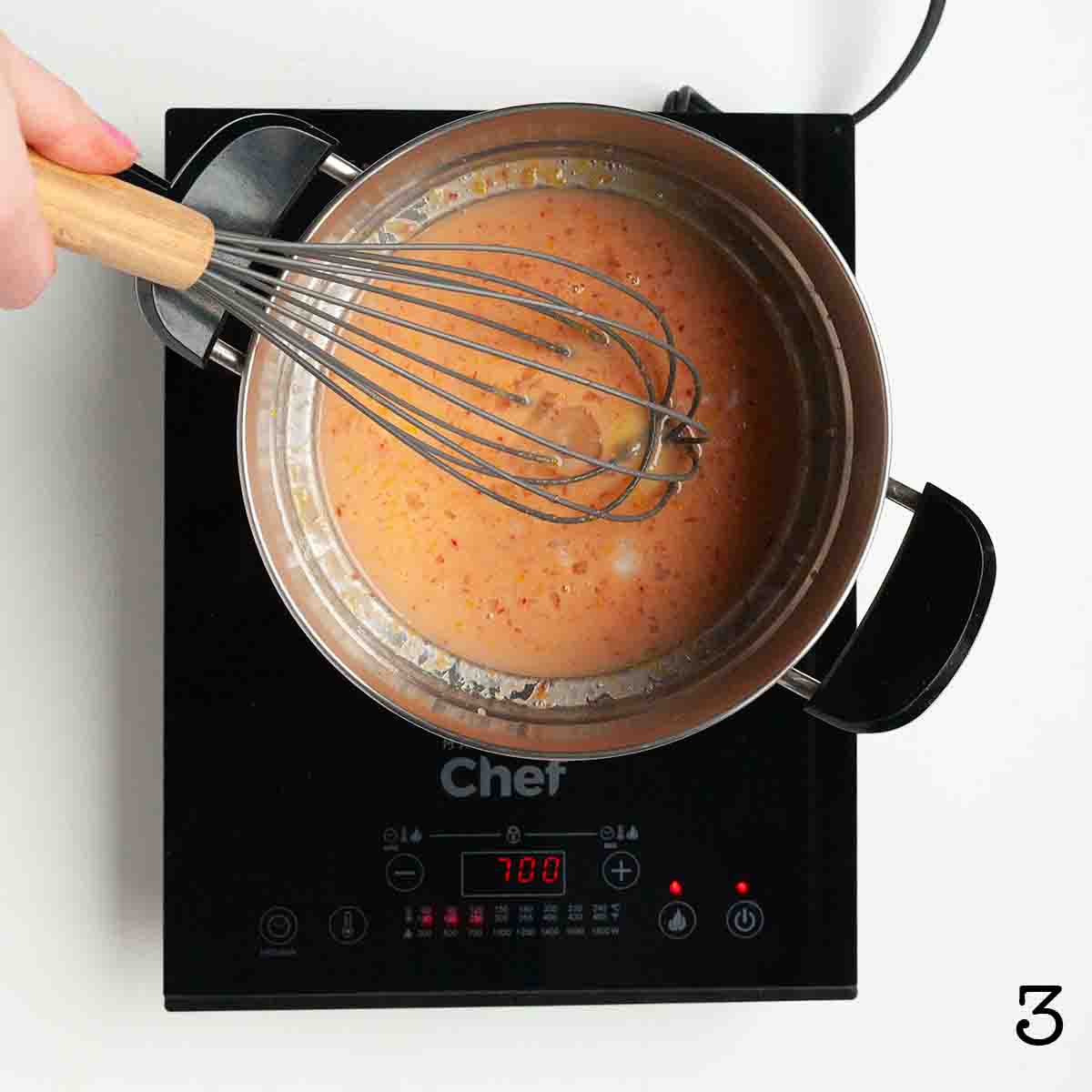
3. Cook in a double boiler over medium heat until thickened.
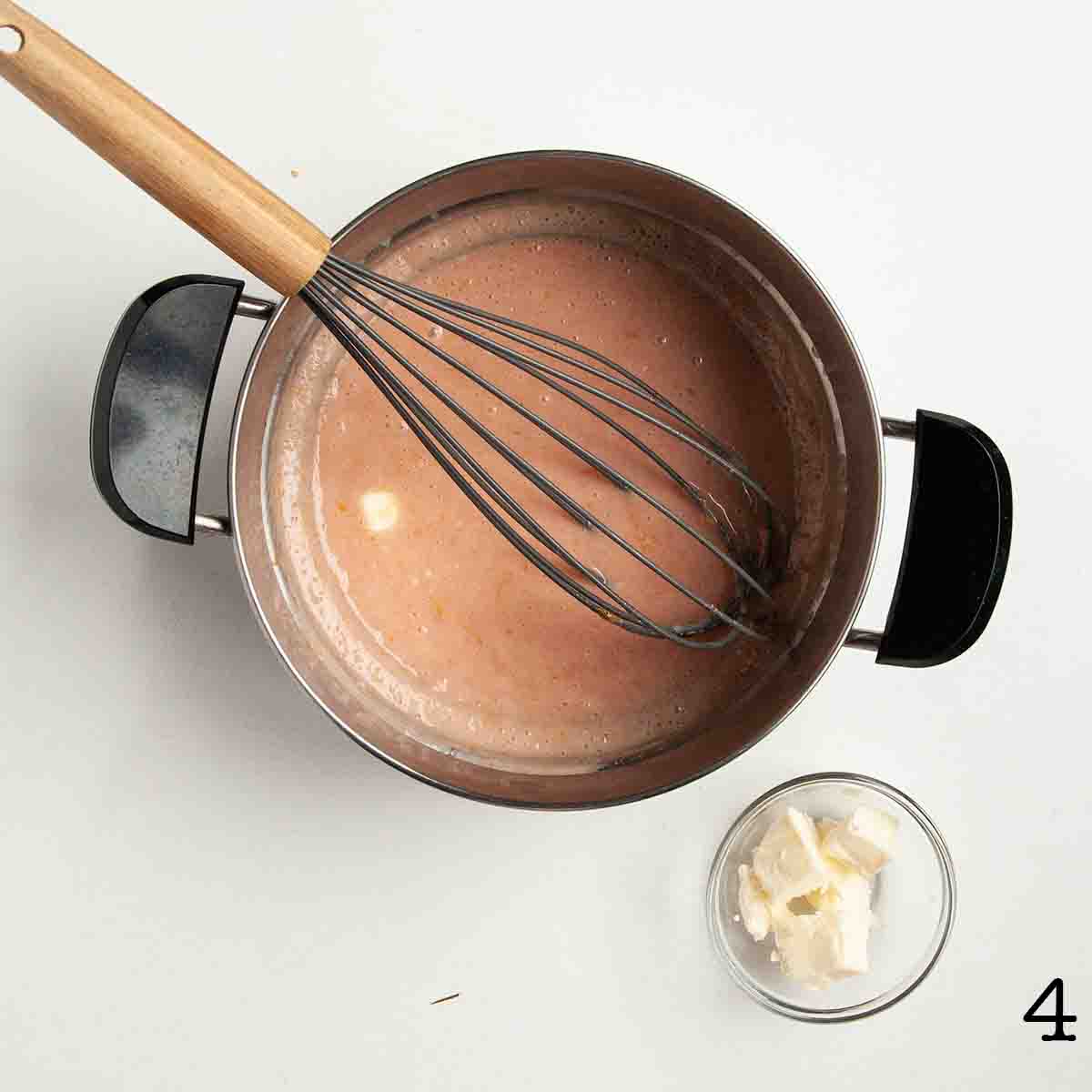
4. Remove from the heat and whisk in the butter, 1 piece at a time.
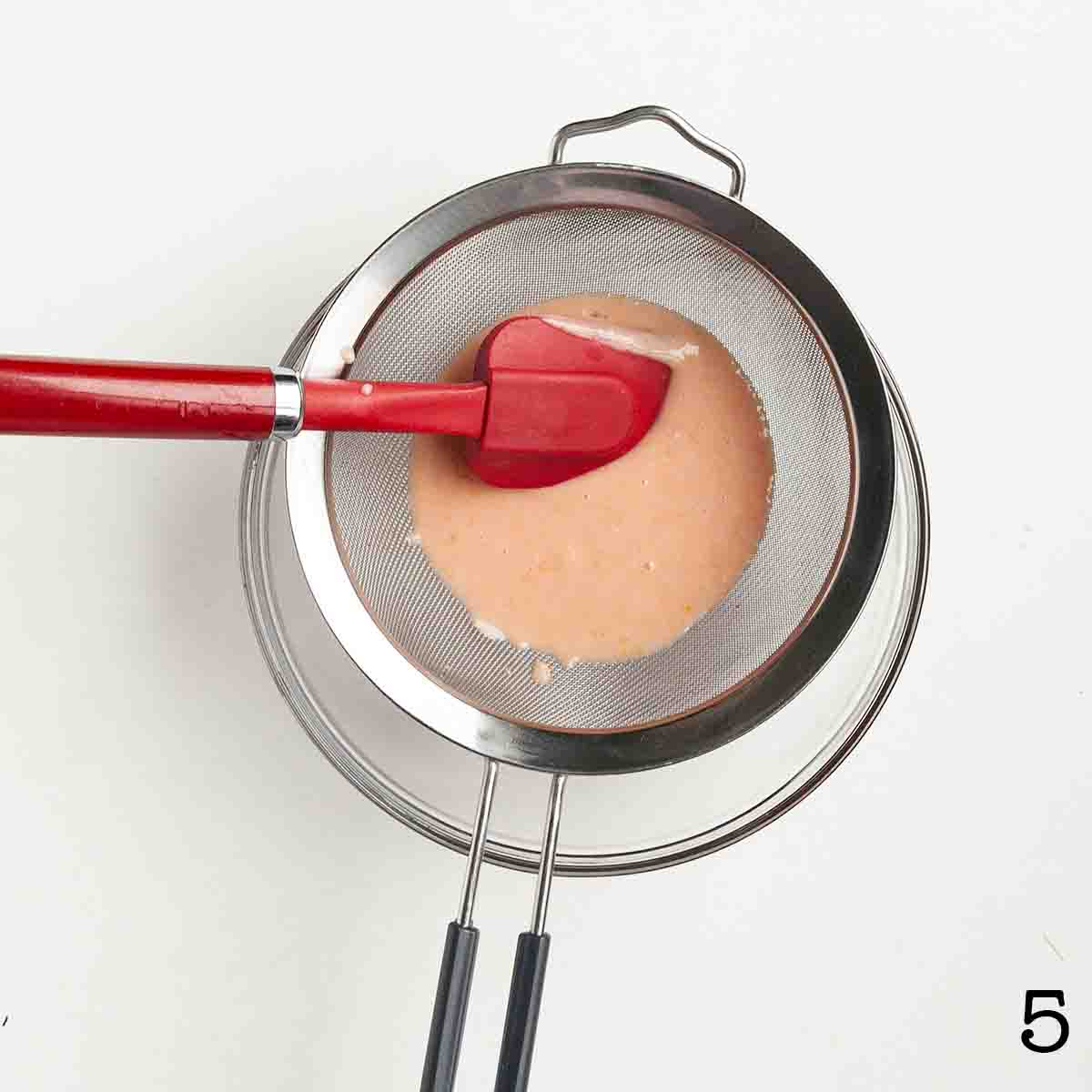
5. Strain the curd through a fine mesh sieve.

6. Transfer to a clean jar and store in the fridge or freezer.
FAQs
Yes. Follow the recipe, simply using your favorite type of freshly squeezed orange juice. Note that your finished curd will be more orange in color.
For the most accurate results, use an instant read thermometer. A medium-set curd is cooked when it reaches a temperature of 185°F (85°C). At this point, the curd should be thickened. If you dip a spoon into it and run your finger through the orange curd on the back of the spoon, a line should remain from your finger.
I don’t recommend it. Although it is common and safe to can lemon curd, oranges aren’t as acidic as lemons, and your finished curd may not have a low enough pH to prevent bacteria from growing. You can freeze the curd for long term storage.
Storage
Store your blood orange curd in an airtight jar in the fridge for up to 2 weeks or in the freezer for up to 6 months. When freezing, leave room in your container or jar for expansion and thaw in the refrigerator before using.
Tips & Troubleshooting
- To strain the curd, pour it into the fine mesh sieve. When it stops flowing easily, use a spatula to gently scrape around the inside. This will help to move the solids around and allow the liquid to pass through.
- It’s ok if the orange curd is thinner than you’d like immediately after cooking. It will continue to thicken as it cools. Don’t try to thicken it by cooking it longer. This will result in overly thick curd.

Blood Orange Curd

Ingredients
- 2 tablespoons blood orange zest (from 2 oranges)
- ½ cup blood orange juice (from 3 oranges)
- 1 tablespoon lemon juice
- ¼ cup superfine sugar
- 3 large egg yolks
- 1 large egg
- Pinch salt
- 3 tablespoons unsalted butter cut into small cubes
Instructions
- In the top of a double boiler, whisk the orange zest, orange and lemon juice, and sugar together until the sugar dissolves.
- Whisk in the egg yolks, whole egg, and salt.
- Set the double boiler over medium heat and cook, whisking constantly until the curd is thickened enough to coat the back of spoon and the temperature reaches 185°F (85°C), 6 to 8 minutes.
- Remove the top of the double boiler from the base and whisk in the butter, one cube at a time, waiting until each one is melted before adding the next.
- Pour the curd through a fine mesh sieve into a clean bowl.
- Transfer the strained curd to a sterilized jar, cover with a lid and store in the fridge for up to 2 weeks or in the freezer for up to 6 months.
Notes
- Straining the curd–To strain the curd, pour it into the fine mesh sieve. When it stops flowing easily, use a spatula to gently scrape around the inside. This will help to move the solids around and allow the liquid to pass through.
- Don’t overcook–The curd may seem thinner than you’d expect after cooking. It will continue to thicken as it cools. Don’t attempt to thicken it by cooking it longer. This will result in an overly thick curd.